
Table of Contents
ToggleA wide refrigerator isn’t just a bigger box, it’s a kitchen game-changer that transforms how you store and access food. Today’s wider units offer significantly more usable capacity without demanding a footprint that swallows your kitchen layout. Whether you’re dealing with a growing family, meal-prepping like a pro, or just tired of playing grocery tetris, a wide refrigerator solves the real problem: you need storage that actually works. This guide walks you through what makes wide refrigerators worth the investment and how to choose the right one for your space.
Key Takeaways
- A wide refrigerator offers 20–40% more usable capacity than standard 30-inch models without requiring additional depth or height, making it ideal for growing families and those who meal-prep frequently.
- Wide refrigerator styles include French-door (minimal swing radius), side-by-side (dual access), and bottom-freezer models, each suited to different kitchen layouts and daily usage patterns.
- Energy Star-certified wide refrigerators consume roughly 20% less electricity than non-certified models, resulting in significant savings over 10 years despite the higher upfront cost of $1,500 to $4,000+.
- Proper installation planning—including accurate measurements, clearance calculations, and electrical/water line setup—prevents costly mistakes and ensures your wide refrigerator operates safely and efficiently.
- Regular maintenance such as cleaning condenser coils every 6–12 months and checking door gaskets can extend your wide refrigerator’s lifespan to 10+ years while keeping energy bills low.
Why Choose a Wide Refrigerator for Your Home
A wide refrigerator typically ranges from 36 to 48 inches in width, compared to standard 30-inch models. That extra width translates to 20–40% more usable capacity without adding depth or height. For homeowners, the appeal is straightforward: more shelf space means fewer trips to the grocery store, less food waste from overcrowding, and better organization at eye level.
Wide models excel in larger kitchens or open-concept layouts where a side-by-side or French-door design becomes a focal point. They also work well in households that entertain frequently or have multiple people managing meal prep. If you’re building a new kitchen or doing a significant remodel, a wider refrigerator fits naturally into modern kitchen designs where appliance aesthetics matter.
The trade-off is real, though. Wide refrigerators cost more upfront, typically $1,500 to $4,000+ depending on features and materials. They also demand proper electrical setup (sometimes a dedicated circuit) and careful door-swing planning so they don’t block counters or nearby cabinets. Be honest about your actual needs before committing. If you live alone or have limited counter space, a standard 30-inch unit might serve you better.
Understanding Wide Refrigerator Dimensions and Styles
Wide refrigerators come in three main styles, and your choice depends on kitchen layout, traffic flow, and how you actually use the fridge.
French Door and Side-by-Side Options
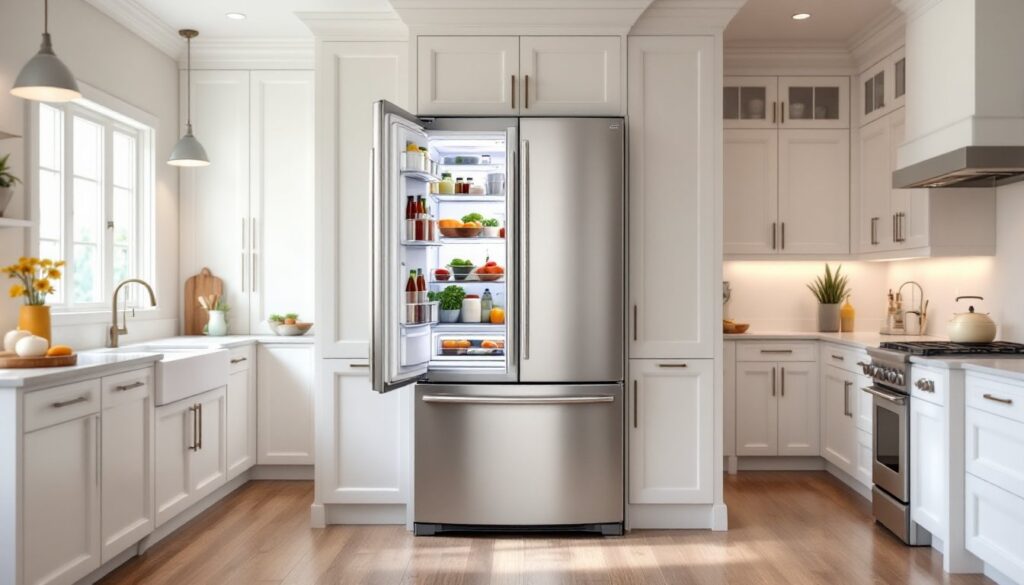
French-door models feature two upper doors that open outward and a full-width freezer drawer below. This design minimizes the swing radius, each door only requires half the width to open fully, making them ideal for kitchens with limited space beside the refrigerator. The wide, shallow shelves on the fridge section mean easier access to items at the back, and the drawer freezer keeps frozen goods at waist level rather than at your knees.
Side-by-side refrigerators split the width vertically: freezer on the left, fridge on the right (or vice versa). They’re excellent if multiple people grab items simultaneously and you want equal access to both sections. But, each door typically swings the full 18–24 inches outward, so they demand more clearance. The narrower shelves on both sides can also feel cramped for larger items like party platters or bulk vegetables.
Bottom-freezer models place the freezer drawer at the bottom and keep the refrigerator section at eye and arm level. This arrangement suits most cooks because fresh ingredients are more accessible than frozen goods. Wide versions of this style offer excellent capacity and straightforward organization, though bending for freezer items becomes a chore as you age.
Consider your kitchen’s traffic patterns. If two people reach for groceries simultaneously during dinner prep, a side-by-side’s parallel access helps. If counter space is tight near the fridge, French-door’s smaller swing radius wins.
Key Features to Look For When Shopping
Beyond width and style, modern wide refrigerators pack features that directly affect daily usability and long-term costs.
Refrigeration tech varies significantly. Look for even-temperature systems that avoid warm spots or frost buildup. Some models use dual-zone cooling or separate compressors for fridge and freezer, which maintain precise temperatures independently. If you meal-prep extensively or store delicate items like fish, precise temperature control matters.
Ice and water dispensers add convenience but also introduce complexity. In-door dispensers occupy shelf space and require a water line, often a DIY installation headache. Under-cabinet or side-mounted options eliminate the awkward reach through the door. Decide if you’ll actually use filtered water daily before paying the premium.
Energy ratings directly hit your electric bill. An Energy Star-certified model uses roughly 20% less electricity than a non-certified equivalent of the same size. Over 10 years, that’s real money. Check the EnergyGuide label for estimated annual costs: reputable manufacturers post actual usage data.
Door shelving design is overlooked but critical. Wide-door shelves must support heavier items like milk jugs and condiment bottles without sagging. Soft-close hinges prevent violent slamming and reduce door gasket wear, a common failure point on older units.
Warranty coverage varies. Most cover parts and labor for 1 year: some extend to 5 years on the compressor. If you plan to stay in your home 10+ years, a longer parts warranty offers peace of mind.
Installation and Space Planning Tips
Measuring twice and planning clearance prevents costly mistakes or a fridge that doesn’t fit through the door.
Measure your opening in three places: width, height, and depth. Nominal measurements on spec sheets don’t account for trim, handles, or the leveling feet. A unit listed as 36 inches wide may actually be 36.5 inches with the handles. Measure your doorways and hallways the fridge must pass through during delivery, diagonal measurements matter if the path turns.
Plan clearance around the unit. Most refrigerators need 1 inch of side clearance for air circulation and 2–3 inches of top clearance if there’s a cabinet above. A side-by-side needs the full 24-inch door swing, so you can’t position it right next to an island. French-door models are more flexible but still need 12 inches per door. Sketch your kitchen layout and physically mark out the space before ordering.
Electrical setup matters more than many homeowners realize. Check the outlet voltage (most wide models require 120V) and whether a dedicated circuit is needed. Sharing a circuit with other appliances can cause voltage drops or nuisance breaker trips. Older kitchens with limited circuits may require an electrician, this isn’t a DIY fix if you lack experience.
Water line installation for ice makers and dispensers involves either a saddle valve (taps into existing supply) or running a new line. If the fridge is far from your main supply, running ½-inch copper or PEX tubing behind walls or under cabinets might be necessary. Mistakes here lead to leaks, so hire a plumber if you’re unsure.
Delivery and positioning is where many issues occur. Remove all transit bolts and packaging before operating the unit, these prevent compressor damage. Let the fridge sit upright for 4–6 hours after delivery before plugging it in if it was transported on its side: refrigerant needs time to settle. Once positioned, level the fridge front-to-back (slightly tilted toward the back helps door closure) and side-to-side using the adjustable feet.
Maintenance and Long-Term Care
Proper upkeep extends the life of a wide refrigerator significantly and keeps energy bills down.
Clean the condenser coils every 6–12 months. Dust buildup forces the compressor to work harder, increasing electricity use and wear. Unplug the unit, locate the coils (usually at the back or bottom), and use a soft brush and vacuum with a crevice attachment. This 15-minute task is one of the highest-ROI maintenance items.
Check and replace door gaskets if they no longer seal properly. A worn gasket lets cold air escape, forcing the compressor to run constantly. Hold a dollar bill in the seal and close the door, if it slides out easily, the gasket needs replacing. Most models use snap-in gaskets that take 10 minutes to swap without tools.
Inspect water lines quarterly if your model has an ice maker or dispenser. Look for slow leaks under the fridge or in the floor beneath it. Shut off the water supply valve if you find a leak and contact the manufacturer for a replacement valve or tube. Small leaks cost pennies to fix immediately but become thousands in water damage if ignored.
Defrost the freezer if your model isn’t frost-free (older or budget-friendly models sometimes require manual defrosting). Ice buildup reduces capacity and makes the compressor work harder. Unplug the unit, remove food, place towels inside to catch meltwater, and let it thaw overnight. Most modern wide refrigerators are self-defrosting, so this is rarely necessary today.
Reputable retailers like Good Housekeeping’s refrigerator reviews and CNET’s best refrigerators guide highlight durable models with proven track records. When issues arise, compressor failures, electrical faults, these are professional repairs. Don’t attempt compressor work yourself: a licensed tech ensures warranty validity and safety.
Conclusion
A wide refrigerator transforms daily kitchen life if your space and budget allow. The real work isn’t the purchase, it’s measuring accurately, planning clearance, and ensuring proper installation. Take time upfront to understand which style (French-door, side-by-side, or bottom-freezer) fits your habits. Once it’s running, simple maintenance keeps it efficient for 10+ years. If you’re tackling a kitchen remodel, The Kitchn’s kitchen design resources offer additional perspectives on appliance layout and kitchen flow planning.