
Table of Contents
ToggleHard water isn’t just a nuisance, it clogs showerheads, leaves film on dishes, and wears out appliances faster. For apartment renters, the problem is compounded: you can’t install a permanent system without landlord approval and can’t easily replace fixtures. But that doesn’t mean you’re stuck with spotty glassware and dry skin. A water softener for apartments offers practical relief, and in 2026, renter-friendly options have matured well beyond gimmicks. Portable softeners, undersink units, and salt-free alternatives now deliver genuine results without requiring you to leave holes in the wall when you move.
Key Takeaways
- A water softener for apartments solves hard water problems like mineral buildup and appliance damage without requiring permanent plumbing modifications or landlord approval in most cases.
- Portable salt-based undersink units ($600–$1,200) offer the best overall softening performance for renters, while salt-free alternatives like TAC cartridges provide lower-maintenance options with reduced scaling but less dramatic results.
- Before purchasing, test your water hardness through your county extension office, confirm your lease allows the installation, and get written landlord approval to protect your security deposit.
- Installation of renter-friendly units takes 30 minutes using compression fittings and quick-connect adapters, and you can remove them completely when moving without leaving permanent damage.
- Budget $500–$1,400 over two years depending on your water softener type, accounting for salt refills, cartridge replacements, and maintenance costs that vary by system and water hardness.
Why Apartments Need Water Softeners
Hard water contains dissolved minerals, primarily calcium and magnesium, that build up in pipes, on fixtures, and inside appliances. In apartments, this matters more than you’d think. You don’t own the plumbing, so mineral scale silts up the landlord’s lines and can reduce water pressure over time. More immediately, hard water shortens the life of dishwashers and washing machines, reduces soap effectiveness, and leaves a chalky residue on bathroom surfaces.
Renters often absorb these costs indirectly: deposits held for damages, higher utility bills from inefficient appliances, or the simple frustration of poor water quality you can’t fix yourself. Hard water also makes cleaning harder and more expensive, you’ll use more detergent and spend more time scrubbing. Hard water is especially common in the Southwest and Midwest, but pockets exist everywhere. If your shower head has white crusty buildup, or if your tap water tastes slightly bitter or mineral-heavy, you’ve got hard water.
The good news: a renter-friendly softener can be installed, removed, and relocated without landlord involvement (in most cases) because it doesn’t permanently alter the plumbing. This flexibility makes it a smart investment if you plan to stay in your apartment for a year or more.
Portable Water Softening Options for Renters
Salt-Based Portable Systems
Salt-based softeners use an ion-exchange process: hard minerals stick to resin beads, and salt water flushes them away during regeneration. Portable models are compact countertop or undersink units, no permanent installation needed.
Countertop dispensers (like the Waterdrop WD-FC-06 or Clearly Filtered pitchers) are the most renter-friendly option. You fill them like a pitcher, they filter water in minutes, and they take up no space. Trade-off: they’re slow and handle small volumes. Use them for drinking water or filling a coffee maker, not for whole-apartment needs.
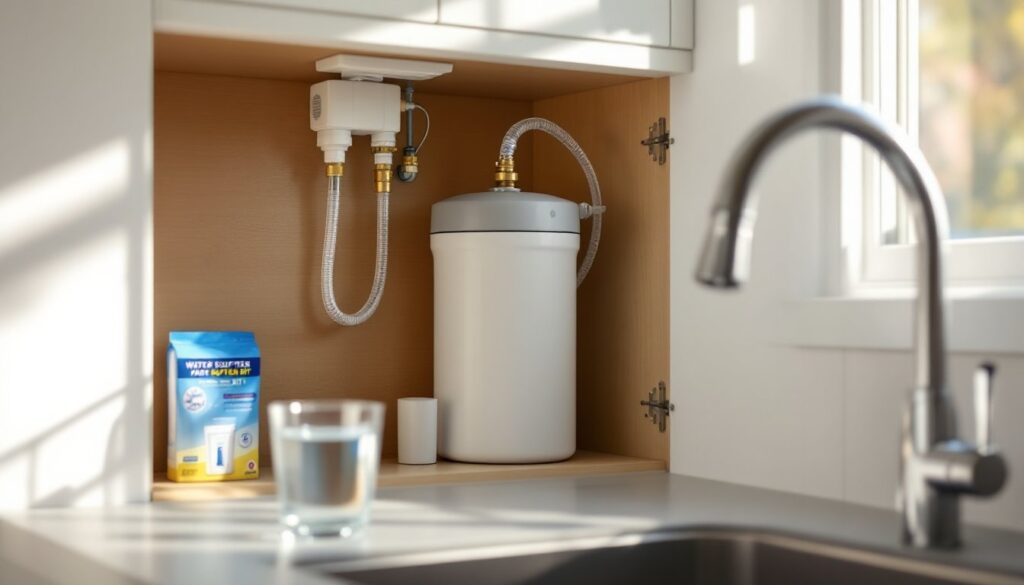
Portable undersink softeners (around $600–$1,200) connect directly to your kitchen cold-water line via a bypass valve. They require a drain line to a sink or utility sink, but no permanent modifications, you simply disconnect when moving. These handle higher volume and cost less per gallon of soft water than pitchers. Important: confirm your lease allows undersink connections. Some landlords require written approval.
Regeneration and salt cost varies by water hardness and usage. Expect to add $5–$10 of salt monthly, depending on how hard your water is and how much you use. Many portable models regenerate automatically: others require manual resets.
Salt-Free Alternatives
Salt-free systems don’t remove minerals: they prevent them from sticking to surfaces. Common types include descalers (using electric or magnetic fields) and template-assisted crystallization (TAC) cartridges that transform minerals into harmless crystals.
Magnetic or electronic descalers ($150–$400) clamp onto incoming pipes and require no chemicals or plumbing changes. Honest assessment: scientific evidence for these is mixed. Some users report genuine improvement: others see no difference. They work best in situations where you want to try a low-risk, low-cost option first.
TAC cartridge systems ($200–$600) install inline and don’t add salt to your water, a plus if you’re sodium-conscious or on a low-sodium diet. They don’t soften water in the traditional sense, but they reduce scaling and soap buildup. These are a solid middle ground: less maintenance than salt systems, better performance than descalers, and no chemical addition.
Reverse osmosis (RO) systems ($300–$800 for a basic undersink unit) remove nearly all minerals and contaminants. They’re excellent for drinking water but slow (producing ~25 gallons per day) and waste water during the filtration process. Use them for kitchen drinking and cooking water only, not whole-apartment soft water.
Choose based on your priorities: salt-based systems give the best overall softening but require ongoing salt purchase: salt-free alternatives are lower maintenance and chemical-free but deliver less dramatic results.
Installation and Setup Considerations
Before buying, check your lease and contact your landlord. Most leases allow temporary fixtures that don’t modify plumbing, but a few prohibit kitchen modifications entirely. Getting written permission now prevents disputes later.
For undersink units: Turn off the water supply under the sink. Disconnect the cold-water line from the faucet or icemaker, attach the softener’s inlet, then reattach the outlet. You’ll also need a drain line, this can run to the sink’s overflow drain or a nearby utility sink. Use compression fittings or quick-connect adapters to avoid permanent changes. Teflon tape helps prevent leaks. If you’re uncomfortable with plumbing fittings, HomeAdvisor can connect you with a local plumber for a one-time setup (usually $100–$200).
For countertop pitchers: Just fill and place on the counter. No installation needed.
Water acclimation: Before you soften water, have it tested. Many areas offer free hardness tests through the county extension office. If you want exact numbers (and calcium/magnesium breakdown), buy an inexpensive hardness test kit ($15–$25) from a hardware store. This tells you how much softening you need and helps you choose the right system capacity.
Flow rate and capacity: Portable systems typically deliver 0.5–2 gallons per minute. If you have a family of four, a slow pitcher won’t cut it. An undersink unit handles kitchen use comfortably but won’t soften your whole apartment, showers and laundry still use hard water. This is a trade-off renters accept.
Power requirements: Some portable softeners are mechanical (no electricity), while others need a plug for digital controls or automatic regeneration. Make sure you have an outlet nearby.
Maintenance Tips and Cost Estimates
Salt-based portables need regular salt refills and occasional resin cartridge replacement (every 3–5 years, $50–$150). Set a reminder to top up salt monthly or as the indicator shows. Store extra bags in a dry spot, salt absorbs moisture and hardens if left open.
Salt-free cartridge systems typically need cartridge replacement every 6–12 months ($30–$80 per cartridge, depending on water usage and hardness). No salt to buy, less hassle, but replace more frequently.
Reverse osmosis filters need replacement every 6–12 months for the sediment and carbon pre-filters, and every 2–3 years for the RO membrane itself. Budget $50–$100 annually for maintenance.
Descalers are maintenance-free except for occasional cleaning of scale deposits elsewhere in the apartment (shower heads, faucet screens). They’re the lowest-commitment option.
Cost comparison over two years:
- Salt-based portable undersink: $700–$1,400 (unit + salt + salt cartridges)
- TAC cartridge system: $500–$900 (unit + cartridge replacements)
- Magnetic descaler: $150–$400 (one-time cost, minimal maintenance)
- RO system: $400–$1,000 (unit + filter replacements)
Angi and HomeAdvisor offer cost calculators and contractor quotes if you decide to hire someone for installation. Most apartment renters handle simple undersink connections themselves using included instructions and YouTube guides.
Tip: Keep all parts and manuals in a clearly labeled bin. When you move, you’ll remove the softener, clean connections, and leave the apartment as you found it. This protects your deposit.
Talking to Your Landlord
Before installation, send a brief email or note to your landlord. Frame it as a low-impact improvement: “I’d like to install a portable water softening unit under the kitchen sink. It uses compression fittings, requires no permanent changes, and I’ll remove it completely when I move.” Most landlords welcome this, soft water benefits them too by protecting the building’s appliances and plumbing.
Include a photo of the unit and clarify that installation takes 30 minutes and uses standard plumbing parts. Offer to show the landlord during installation or provide your plan in writing. If they ask for a maintenance contract or insurance, ask for details. Some landlords simply want written acknowledgment that you’ll cover any damage caused during removal.
If your landlord refuses, ask why. Sometimes it’s a blanket policy: other times, there’s a specific concern about drain placement or shared plumbing. Negotiate: Can you use a countertop pitcher instead? Can you soften water only for one sink? Small compromises often work.
In rare cases, a landlord might restrict modifications entirely. That’s when a descaler or magnetic water treatment device becomes your best bet, it clamps to the incoming pipe outside, needs no plumbing connection, and requires no permission once installed.