Table of Contents
ToggleA convertible range hood is a ventilation system that can operate in either ducted or ductless mode, giving homeowners flexibility that standard range hoods simply don’t offer. If you’re renovating a kitchen, dealing with a tricky wall layout, or unsure about your ventilation setup, a convertible range hood bridges the gap between permanent installation requirements and temporary flexibility. These units have become more common and affordable, making them worth understanding before you commit to any kitchen exhaust system. Whether you’re planning a full remodel or upgrading an existing hood, knowing how convertible models work, what they cost to install, and how they compare to fixed options will help you make the right choice for your space.
Key Takeaways
- A convertible range hood operates in both ducted and ductless modes, offering flexibility that standard range hoods cannot match.
- Ducted mode removes cooking byproducts entirely from your kitchen but requires exterior ductwork, while ductless mode uses charcoal filters and recirculates air without structural modifications.
- Convertible hoods cost $200–$500 more than fixed-mode units but eliminate the need to choose between two separate appliances and can be switched between modes if your needs change.
- Proper installation requires measuring your cooktop width, ensuring 15–18 inches of clearance above it, and planning ductwork routes to avoid obstructions and structural interference.
- Regular maintenance—including cleaning aluminum mesh filters every 1–2 months and replacing charcoal cartridges every 4–6 months—keeps your convertible range hood efficient for 10–15 years.
- Ducted hoods are superior for serious cooks and open-concept kitchens, while ductless mode works well for rentals, smaller spaces, and situations where exterior venting is impossible.
Understanding Convertible Range Hoods
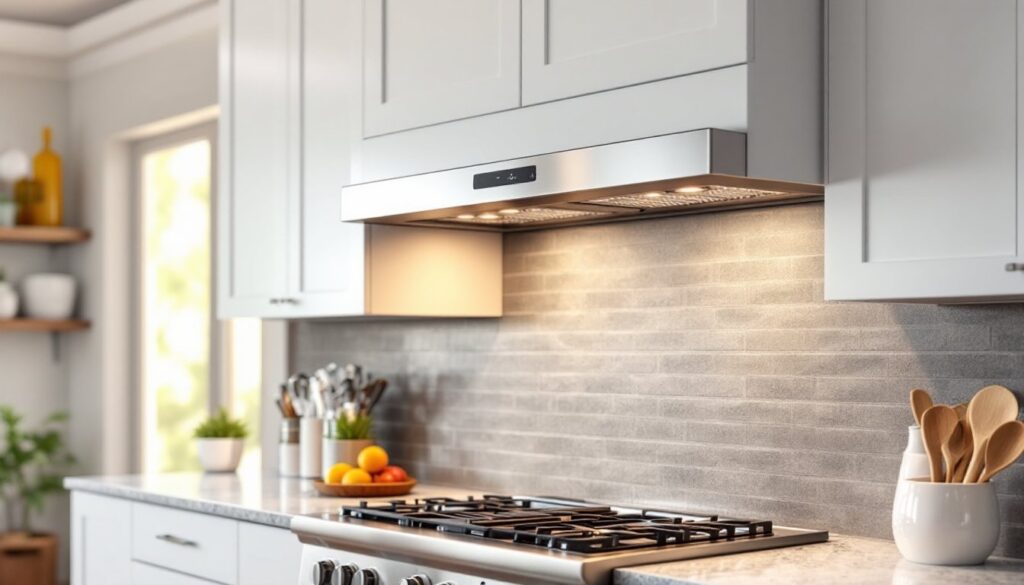
A convertible range hood is designed to work in two ways: it can be hooked up to exterior ductwork to push cooking exhaust outside (ducted mode), or it can filter the air through charcoal cartridges and recirculate it back into the kitchen (ductless mode). The hood itself contains dampers and valve systems that allow you to switch between these two functions, though most installations commit to one mode or the other.
These hoods typically come as either under-cabinet models (mounted beneath your cabinets) or wall-mounted units (installed above the stovetop on a wall). The control over ventilation mode makes them ideal for kitchens where ducting to the outside isn’t feasible or where structural limitations exist.
How They Differ From Other Range Hoods
A standard ducted range hood has no choice, it requires ductwork running to an exterior wall or roof to remove cooking odors and moisture. If your kitchen doesn’t have access to the outside, you’re stuck. A traditional ductless hood, by contrast, only recirculates air, offering less powerful odor removal than true ducted venting.
Convertible models split the difference. They give you options at the time of installation, and some designs allow you to switch modes if your needs change later. This flexibility comes at a moderate premium over a fixed-mode hood, but for many DIYers and remodelers, it’s worth the extra $200–$500.
Ducted vs. Ductless Convertible Options
When you choose ducted mode, your convertible hood pulls cooking smoke, steam, and odors out of the kitchen entirely through rigid or flexible ductwork (typically 5 to 6 inches in diameter) that leads to an exterior vent. This is the most effective way to remove cooking byproducts, nothing stays in your kitchen. But, ducted installation requires access to an exterior wall or roof, and you’ll need to account for ductwork routing, potential obstacles, and adherence to building codes in your jurisdiction.
Ductless mode uses a charcoal filter cartridge that traps grease and odors as air passes through it. The cleaned air recirculates back into your kitchen. You won’t need to cut walls or run ductwork, but the filter requires regular replacement (every 4–6 months with heavy cooking, longer with moderate use), and the effectiveness depends on the hood’s CFM (cubic feet per minute) rating and filter quality. Many homeowners find ductless mode adequate for light to moderate cooking or as a temporary solution.
Your choice often depends on your kitchen layout, budget for installation, and how much venting power you actually need. A ducted setup with proper ductwork is superior for serious cooks or open-concept kitchens where odors spread quickly. Ductless mode suits smaller kitchens, rented spaces, or situations where exterior venting isn’t possible. A convertible hood designed for kitchen design ideas lets you decide this during installation rather than being locked in by your hood choice.
Key Benefits for Your Kitchen
The primary advantage of a convertible range hood is flexibility. If you buy a home with an outdated kitchen and aren’t sure whether you’ll eventually run ductwork to the outside, a convertible hood lets you start with ductless mode and switch later. If you’re renting and your lease forbids permanent modifications, ductless mode gives you functional exhaust without walls or ceilings being altered.
Convertible hoods also simplify purchasing decisions. You’re not forced to choose between two separate appliances, one hood covers both scenarios. This reduces decision fatigue and often costs less than buying two different units.
From a resale perspective, a kitchen with proper ventilation (whether ducted or ductless) is more attractive to buyers than one without. Many buyers perceive convertible hoods as a sign of thoughtful, flexible design. Also, ducted exhaust removes moisture from the home, which protects drywall, insulation, and framing from mold and rot, a benefit worth considering according to home safety guides and building standards.
Noise levels also matter. Ducted hoods can be louder because they move air through ductwork: ductless models tend to run quieter since they only recirculate. A convertible unit in ductless mode will be quieter than the same hood in ducted mode.
Installation and Space Considerations
Before purchasing a convertible range hood, measure your cooktop and check the wall or cabinet space above it. Most hoods are 24, 30, 36, or 42 inches wide, they should be at least as wide as your cooking surface, ideally a few inches wider to catch side-to-side fumes.
For under-cabinet installation, verify that you have at least 15–18 inches of clearance between the cooktop and the bottom of the cabinet or hood. National standards typically recommend 20–24 inches for electric cooktops and 28 inches for gas units, though always check the hood’s manual for its specific requirements.
If you’re going the ducted route, plan your ductwork run before ordering. You’ll need to identify an exit point on an exterior wall or roof, measure the distance to ensure you can run duct without excessive bends (each bend adds resistance), and confirm that you won’t run into structural framing or utilities. A circular saw and basic carpentry can handle cutting through drywall, but if you’re running duct through a joist bay or roof, a second pair of hands is essential, and you may need to consult local building codes or hire a contractor.
For ductless mode, you simply need electrical access near the hood for the plug or hardwired connection. Check your kitchen’s electrical capacity to ensure you’re not overloading a circuit. Most hoods draw 100–400 watts in ductless mode, 200–500 watts in ducted mode when the damper opens. Installation typically takes 2–4 hours for a competent DIYer, though ducted routing can extend that timeline. Consider calling a professional if you’re uncomfortable with cutting through walls or managing ductwork.
Maintenance and Operating Tips
Proper maintenance keeps your convertible hood working efficiently and extends its lifespan. The aluminum mesh filter (the grease trap) should be cleaned or replaced every 1–2 months depending on your cooking frequency. Most are dishwasher-safe, so pop them in with a hot cycle, never use a degreaser strong enough to damage the aluminum mesh itself.
If you’re running in ducted mode, inspect the ductwork annually for grease buildup, lint, or obstructions. A blocked or kinked duct severely reduces performance and can create fire hazards. Use a duct brush or compressed air to clear debris. Check the damper inside the hood or at the exterior vent cap, it should open and close freely.
In ductless mode, swap out the charcoal filter cartridge every 4–6 months, sooner if you cook frequently. Some cartridges are washable (a quick rinse and dry-down): others are disposable. Read your hood’s manual to confirm. A clogged charcoal filter loses effectiveness and can cause the motor to work harder, shortening its life.
Run your hood on medium speed for light cooking and high for heavy steam or high-heat work. Running at maximum power continuously wears the motor faster and uses more electricity than needed. Most manufacturers recommend running the hood for 5–10 minutes after cooking stops to clear lingering odors. Keep the area around the hood clear of grease splatter and dust, and wipe the exterior occasionally with a damp cloth. When consulting kitchen and bathroom remodel inspiration, remember that a well-maintained hood stays quiet and efficient for 10–15 years.
Conclusion
A convertible range hood is a smart, flexible choice for homeowners who value options. Whether you need ducted power or ductless simplicity, a single unit can deliver both. Measure your space, plan your installation route, and don’t skip regular maintenance, these straightforward steps will ensure your hood performs well for years to come.