
Table of Contents
ToggleMost people toss leftovers on whatever shelf has space, but your refrigerator isn’t equally cold throughout, and that matters more than you’d think. The coldest part of your refrigerator determines which foods stay fresher longer and which spoil faster. Understanding temperature zones inside your fridge isn’t just a food-safety thing: it’s practical knowledge that extends shelf life, reduces waste, and keeps your family safer. Whether you’re storing raw chicken, dairy, or produce, knowing where the cold spots live can make a real difference in your kitchen’s efficiency.
Key Takeaways
- The coldest part of the refrigerator is the back lower shelves, sitting around 32°F to 35°F, making it the ideal zone for raw meat, poultry, and seafood that require sustained intense cold.
- Middle shelves hover near 40°F (the USDA danger zone threshold), so reserve them for leftovers, cooked foods, and opened condiments rather than raw proteins.
- The refrigerator door is the warmest zone at 45°F to 50°F and should only store items with preservatives or acidity, like butter and condiments—never dairy or raw meat.
- Use a $10–$20 digital thermometer to verify your fridge’s actual temperatures on middle and bottom shelves, ensuring proper food safety rather than relying on assumptions.
- Proper food storage in the right temperature zones reduces waste, prevents foodborne illness, and keeps your family safer while extending shelf life.
The Coldest Zones in Your Refrigerator
Back Lower Shelves: The Coldest Spot
The back lower shelves of your refrigerator are the coldest zones, typically sitting around 32°F to 35°F (0°C to 1.7°C). This is where cold air settles naturally because refrigerators blow chilled air from vents, usually located at the back. Heat rises, so the lowest points capture and retain the most cold.
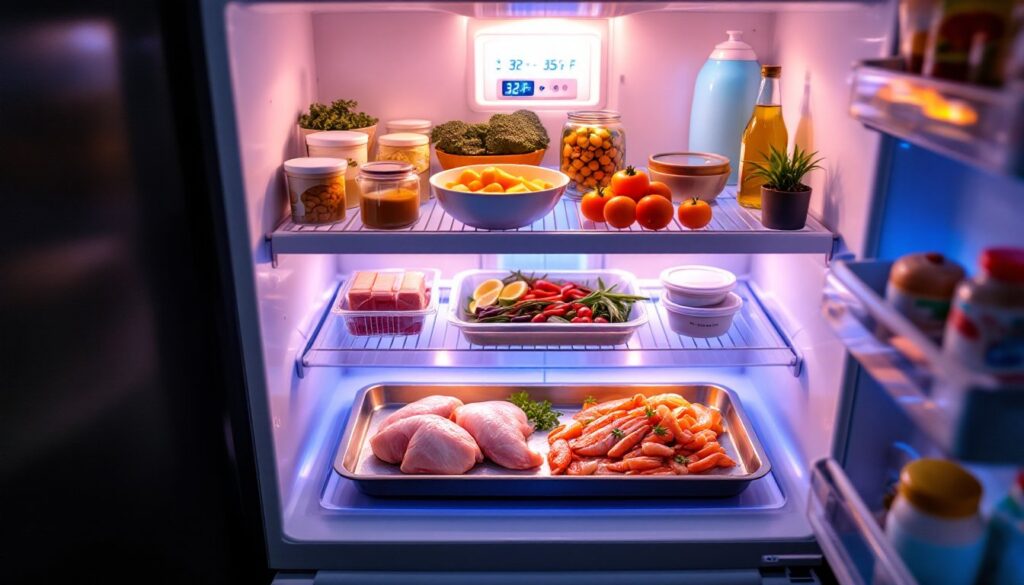
This zone is ideal for raw meat, poultry, and seafood. These items need sustained, intense cold to slow bacterial growth. Place packages on the bottom shelf, toward the back, so any drips won’t contaminate ready-to-eat foods above them. Some fridges have a dedicated deli drawer or meat keeper with its own temperature control, use it if you have one.
Dairy products, eggs, and prepared foods also do well here, though you can position them slightly higher or forward if space is tight. The key is keeping this coldest zone reserved for items that genuinely need it. Don’t clutter it with things that’d be fine elsewhere.
The Danger Zone: Middle Shelves and Door
Middle shelves hover around 38°F to 40°F (3°C to 4°C), warmer than the bottom but still refrigerated. The USDA considers 40°F and above the “danger zone” where bacteria multiply rapidly. Your middle shelves sit right at that threshold, making them risky for highly perishable items.
Use middle shelves for leftovers, prepared foods, sauces, and condiments you’ve already opened. These items are safer here because they’ve been cooked or processed and don’t have the same contamination risk as raw proteins.
The refrigerator door is the warmest zone, 45°F to 50°F (7°C to 10°C) on average. Every time you open the door, warm air rushes in, and that shelf doesn’t benefit from the cold air circulation like interior shelves do. Never store eggs, dairy, or raw meat on the door, even though many fridge designs have egg racks there. Store condiments, butter, and juice there instead. These items tolerate warmer temperatures because of their acidity or preservatives.
Why Temperature Varies Across Your Fridge
Your refrigerator doesn’t cool uniformly. Cold air enters through vents, typically at the back or bottom, and spreads outward and upward. The farther you move from those vents, the warmer it gets. Upper shelves and door areas receive less direct airflow, so they warm up faster and stay warmer.
Air circulation is also affected by what you store and how densely you pack the fridge. Overstuffed fridges don’t allow cold air to circulate properly, creating warm pockets. Leave some space around items, especially against the back wall where vents are located.
Humidity also plays a role. Some newer fridges have humidity-controlled drawers for produce, these maintain higher moisture levels, which actually keeps vegetables fresher longer even though being slightly warmer than the main fridge compartment. Sealed compartments trap this moisture, so the coldest part of the refrigerator overall is still the open shelving area at the back bottom.
How to Store Food in the Right Temperature Zones
Now that you understand where the coldest part of the refrigerator lives, use that knowledge strategically:
Bottom Shelf (Coldest): Raw meat, poultry, fish, and seafood go here, always in sealed containers or on a tray to prevent drips.
Middle Shelves: Leftovers, cooked foods, dairy products (milk, yogurt, cheese), eggs (if not in a door rack), and deli meats.
Upper Shelves: Beverages, jams, opened condiments, and items you don’t need ice-cold but want chilled.
Crisper Drawers: Produce goes here. These drawers maintain slightly higher humidity and are typically around 36°F to 42°F. The coldest part of the refrigerator might be the lower shelf, but humidity-controlled crisper drawers extend vegetable and fruit life by trapping moisture.
Door: Condiments, butter, drinks, and items that tolerate warmer temps. Never store eggs or dairy here long-term.
The reasoning: perishable raw proteins need the most consistent, coldest environment. Cooked foods and dairy need cold but tolerate slightly warmer temps. Non-perishables and items with preservatives belong in warmer zones. Following this layout reduces spoilage and keeps your food safe.
Use a Refrigerator Thermometer to Check Your Setup
Knowing where the coldest part of the refrigerator is means nothing if your fridge itself isn’t cold enough. Most refrigerators should maintain 35°F to 38°F (1.7°C to 3.3°C) in the main compartment.
Buy an inexpensive digital thermometer (around $10–$20) and place one on the middle shelf and one on the bottom shelf for 24 hours with the door closed. Compare readings. If your bottom shelf reads below 35°F and your middle shelf reads between 37°F and 40°F, you’re in good shape. If everything reads above 40°F, your fridge isn’t cooling properly, adjust the thermostat dial (usually inside the fridge near the top) or call a technician.
Here’s the handy part: once you’ve confirmed your actual temperatures, you know precisely how conservative or aggressive your storage strategy needs to be. Some older fridges run warmer overall, meaning you need to be extra cautious about raw proteins. Newer fridges run colder, so you have more flexibility. The coldest part of the refrigerator in your unit might be a few degrees different from average, so test it yourself rather than guessing.
Check temperatures seasonally, especially in summer when ambient heat affects cooling efficiency. A simple thermometer is one of the cheapest food-safety investments you can make, and it removes the guesswork from your storage routine.
Conclusion
The coldest part of your refrigerator isn’t random, it’s physics. Cold air sinks, so back lower shelves win. Using that knowledge to organize what goes where prevents foodborne illness, cuts waste, and makes meal prep simpler. Grab a thermometer, verify your fridge’s actual temps, and arrange your storage accordingly. Small changes to how you use your fridge’s temperature zones pay dividends in food safety and freshness.