
Table of Contents
ToggleBuying a refrigerator is supposed to be a straightforward appliance purchase, keep food cold, move on with life. Yet every year, homeowners discover they’ve invested $1,500 to $3,000 in a unit that dies prematurely, leaks water, or cycles erratically. A refrigerator breakdown isn’t just inconvenient: it’s a financial setback that could’ve been avoided with better research upfront. The good news: knowing which brands consistently disappoint can save you thousands and endless frustration. This guide walks through the worst performers, what goes wrong, and what actually holds up when it counts.
Key Takeaways
- Worst refrigerator brands like Haier, Insignia, Magic Chef, Crosley, Danby, Summit, and Beko fail prematurely due to defective compressors, frost buildup, and poor warranty support within 3–6 years.
- Common failure patterns include inadequate insulation, faulty door gaskets, low-grade water line tubing, and compressor noise that signals internal wear before complete breakdown.
- Budget refrigerator models often cut corners on essential components, resulting in repair costs of $400–$800 after warranties expire, making the initial savings meaningless.
- Established brands like LG, Samsung, Whirlpool, and Electrolux offer superior reliability through quality compressors, better insulation, and robust defrost systems worth the higher upfront investment.
- When comparing refrigerators, read reviews for recurring complaints across multiple sites, check for 5+ year compressor warranties, and prioritize ENERGY STAR efficiency ratings to ensure long-term durability.
- Total cost of ownership over 10 years favors reliable mid-range models from trusted manufacturers over budget units, as a $1,800 Whirlpool typically outlasts a cheaper Haier by several years.
Common Issues Among Low-Performing Refrigerator Brands
Before diving into specific brands, it helps to recognize the red flags that plague problematic units. Cheap refrigerators often cut corners on insulation, gaskets, and compressor quality, the heart of any fridge. Poor insulation means the compressor runs constantly, driving up electric bills and burning itself out faster. Faulty door gaskets let cold air escape, forcing the system to work harder and fail sooner.
Water line issues are another common culprit. Models with ice makers or water dispensers often use low-grade plastic tubing and fittings that crack, leak, or separate at connections. This happens behind the fridge where damage goes unnoticed until water damage shows up on your kitchen floor or cabinets.
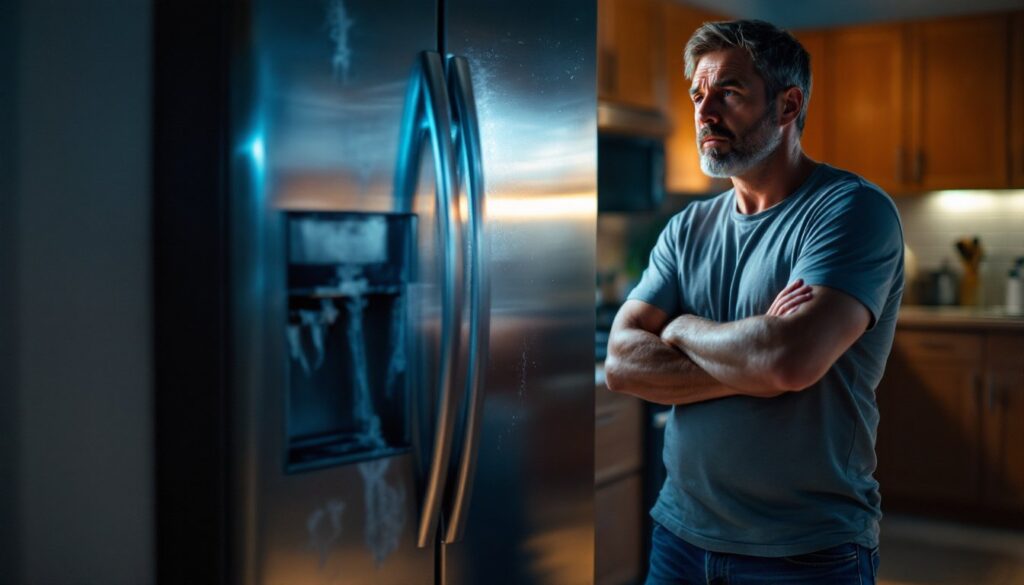
Frost buildup in the freezer section signals inefficient defrost cycles. When the automatic defrost system fails, a surprisingly common problem in budget brands, ice accumulates, restricting airflow and reducing efficiency. Homeowners then resort to manual defrosting, which defeats the purpose of a modern appliance.
Compressor noise that ramps up over time is another warning sign. A healthy compressor runs quietly and cycles normally. A failing one makes grinding or clicking sounds, indicating internal wear or bearing problems. By the time you hear it clearly, damage is usually already significant.
These issues don’t appear overnight. They develop within 3 to 5 years, right after the warranty expires, leaving you footing a $400 to $800 repair bill, sometimes more if the compressor needs replacement. That’s when “budget-friendly” becomes expensive.
Top Brands with the Worst Reliability Records
Brands Known for Compressor Failures
Haier units consistently rank among the worst for compressor problems. Models from 2019 to 2024 show a high failure rate within 4 to 6 years, with many users reporting units that stop cooling entirely. The compressors in these units lack adequate thermal protection, causing them to overheat and shut down permanently. When repairs happen out of warranty, Haier’s service costs are steep, and replacement units are slow to source.
Insignia, a Best Buy house brand, has a similar track record. These budget-friendly models appeal upfront, but compressor failures plague units across their French-door and side-by-side lineups. The company uses cheaper compressor motors and inadequate cooling fans, leading to premature failure. Warranty claims are often denied due to vague language about “normal wear,” forcing homeowners into repair costs they didn’t anticipate.
Magic Chef refrigerators, popular at big-box retailers, fail almost predictably by year 5. Compressor noise starts early, then failures follow. Parts availability is also poor, meaning repair wait times stretch into weeks. By that point, food spoils and frustration builds.
Crosley (the rebranded white-goods line, not the retro turntable company) is another name to avoid. Their compressors lack durability, and service support is scattered and inconsistent. Many owners report being told their unit is “not worth repairing” because replacement parts cost as much as a new appliance.
Models with Excessive Frost Buildup
Danby models, especially their compact and mini-fridge lines, frequently develop defrost system failures. Ice buildup accelerates the compressor’s demise because the system works harder to push cold through ice-choked coils. Users find themselves manually defrosting units multiple times per year, a sign the automatic system isn’t working.
Summit refrigerators, positioned as mid-range options, exhibit defrost failures in their freezer sections. The drain lines freeze or clog, preventing melted ice from draining properly. This water then re-freezes, creating a blockage. Clearing the drain requires removing shelves and panels, a tedious task that becomes routine with these models.
Beko refrigerators, imported and sold through limited retailers, have documented defrost cycle problems. The thermostat and defrost timer combinations fail frequently, leaving the freezer in a constant frost-building cycle. Parts are hard to source in North America, extending downtime.
What Homeowners Should Look For Instead
If avoiding the worst is half the battle, knowing what to choose is the other half. Focus on brands with proven reliability: LG, Samsung, Whirlpool, and Electrolux consistently perform better across reliability surveys and warranty claim data. They invest in quality compressors, better insulation, and robust defrost systems.
LG French-door models are pricier upfront but carry better long-term reliability. Their inverter compressors adjust cooling intensity based on load, reducing wear. They also use stainless-steel cooling coils instead of aluminum, preventing corrosion.
Whirlpool units hold up well, especially their basic top-freezer models. These are less “fancy” but more dependable. Fewer electronic controls mean fewer failure points.
When shopping, read reviews beyond star counts. Look for recurring complaints about specific issues (compressor noise, water leaks, frost buildup) across multiple review sites. If ten reviews mention the same problem, that’s a pattern, not an outlier. According to Good Housekeeping’s product reviews for home appliances, thorough testing reveals defects that only surface after months of real-world use.
Check the warranty length and coverage terms. Brands confident in their products offer 5+ years on compressors. Haier and Insignia typically max out at 1 year on parts, a telling sign.
Consider energy efficiency ratings (ENERGY STAR). More efficient units run less, stressing the compressor less. Over 10 years, this adds up in both electricity savings and component longevity.
For kitchen design and appliance reviews, homeowners should evaluate how a refrigerator fits the space and workflow, not just aesthetics. An unreliable fridge looks great for a year, then becomes a costly problem. Function trumps form when reliability is at stake.
Finally, don’t assume that price alone guarantees quality. Mid-range models from established brands often deliver better value than budget units from lesser-known makers. A $1,800 Whirlpool will likely outlast a $1,200 Haier by several years, making the extra upfront cost worth it when you calculate total cost of ownership over 10 years.
Conclusion
A refrigerator failure can derail kitchen plans and drain your wallet. The brands covered here, Haier, Insignia, Magic Chef, Crosley, Danby, Summit, and Beko, share a common pattern: premature compressor failure, defrost issues, and poor warranty support. By steering clear and investing in proven brands, you avoid the headache. Research thoroughly, read for patterns, and remember: the cheapest option rarely proves cheapest in the long run. A reliable fridge earns its cost every single day it keeps your food safe.