Table of Contents
ToggleMesa, Arizona has quietly become one of the nation’s most attractive markets for tiny home buyers seeking affordability and desert simplicity. With its sprawling communities, warm climate, and surprisingly affordable real estate, Mesa offers a compelling entry point into the tiny home lifestyle. Whether you’re downsizing, looking to escape rising housing costs, or drawn to the minimalist movement, Mesa’s inventory of tiny homes ranges from fixed foundations to innovative mobile units. This guide walks you through the essentials: what drives the market, what to expect in terms of size and cost, where to look, and what legal considerations come into play before you sign that purchase agreement.
Key Takeaways
- Mesa’s tiny homes market offers affordability ranging from $120,000 to $300,000, making it an attractive alternative to higher-cost Phoenix and Scottsdale markets.
- Typical tiny homes for sale in Mesa measure 280–600 square feet and feature space-saving solutions like lofted bedrooms, open-concept layouts, and multi-functional furniture to maximize comfort in compact living.
- Verify zoning compliance and permitting history with the City of Mesa Planning & Zoning Department before purchase, as mobile tiny homes and ADUs face different legal requirements than site-built homes.
- Mesa’s desert climate reduces operational costs with 300+ days of sunshine and no winter heating expenses, plus forced-air AC and Energy Star appliances are standard in modern tiny home builds.
- Work with a local real estate agent experienced in tiny homes to identify ADU-friendly neighborhoods, evaluate HOA restrictions, and confirm utility availability before committing to a property.
- Explore diverse Mesa neighborhoods—from walkable Downtown to family-friendly South Mesa—and inspect during evening hours to assess parking, noise levels, and community character.
Why Mesa Is Becoming A Tiny Home Hot Spot
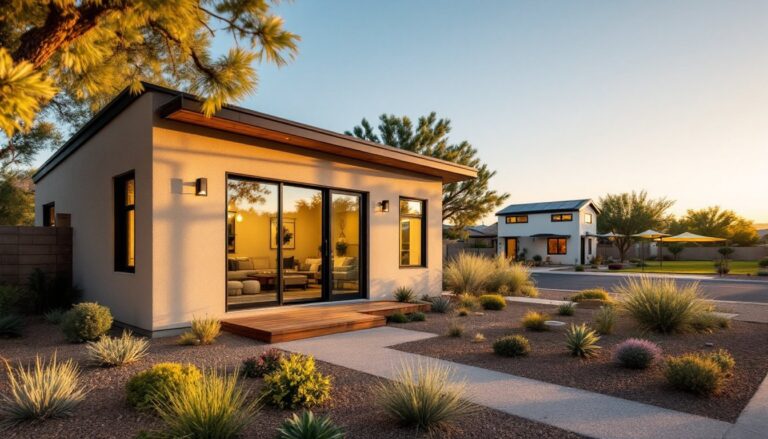
Mesa’s population has swelled in recent years, but affordability hasn’t disappeared entirely, especially in the tiny home segment. The city sits in Maricopa County, where land costs remain lower than Phoenix proper, and building codes are relatively friendly to accessory dwelling units (ADUs) and alternative housing types. Desert living carries inherent appeal: low humidity, 300+ days of sunshine annually, and no winter heating bills make the operational cost of a small home extremely lean.
The pandemic accelerated remote work adoption, and many professionals realized they could live anywhere with reliable internet. Mesa became a magnet for this demographic. Schools like Mesa Community College and proximity to Arizona State University also draw younger residents willing to embrace compact living. Also, the aging-in-place movement has pushed retirees toward maintenance-free tiny homes as an alternative to traditional downsizing. You’ll find Tiny Homes Arizona resources specifically highlighting Mesa as a growing corridor for this lifestyle. Local tiny home builders and community developers have noticed the trend and are actively developing projects tailored to the market’s needs.
What To Expect: Typical Tiny Home Sizes and Features in Mesa
Mesa’s tiny homes typically range from 280 to 600 square feet, though some custom builds exceed that envelope. Most conventional definitions of “tiny” cap out around 400 square feet, but builders in Mesa often stretch slightly beyond to capture middle-market buyers hesitant about extreme downsizing.
Standard features include open-concept living areas, compact kitchen layouts, lofted or vaulted bedrooms, and multi-functional spaces, think murphy beds or fold-down dining tables. Bathrooms are almost always single-bath, sometimes with a wet room combining shower and laundry. Flooring is typically vinyl plank or polished concrete (easier to maintain in the desert heat). Most include forced-air AC (essential in Mesa summers), and modern units feature Energy Star appliances and smart thermostats.
Layout Styles and Space-Saving Solutions
Two main layout philosophies dominate Mesa’s market. Vertical layouts maximize loft space, with sleeping areas above the main living zone, useful for couples or small families. Open-plan layouts eliminate hallways and use sliding doors or folding partitions to create temporary separation.
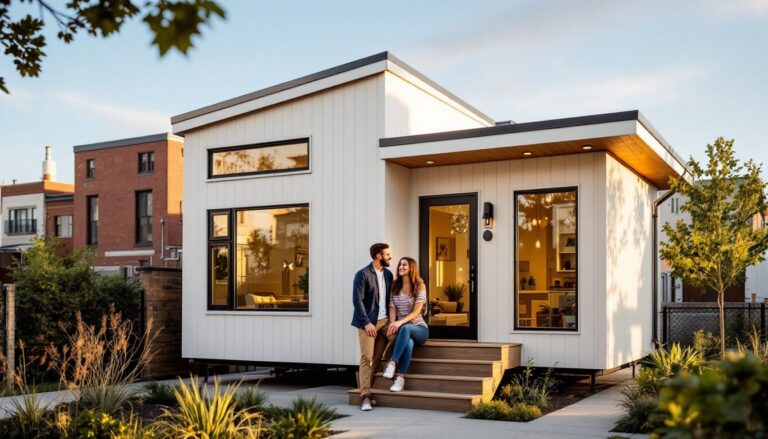
Space-saving solutions you’ll encounter include built-in shelving, overhead cabinetry, pull-out pantries, and hidden storage under staircases. Many homes feature outdoor living areas (patios or covered porches) that effectively expand usable square footage without adding interior space. High ceilings (often 9-10 feet in the living area) create an illusion of roominess. Windows are strategically placed to maximize natural light and cross-ventilation, critical in Arizona’s heat. Exploring Tiny Home Ideas: Transform Your Space can provide visual inspiration for layout strategies that work in tight footprints.
Budget Breakdown: Pricing and Affordability in the Mesa Market
As of early 2026, Mesa’s tiny home market reflects regional variation. New construction tiny homes range from $180,000 to $300,000 depending on finishes and lot inclusion. Pre-owned units run $120,000 to $200,000, though older or non-code-compliant units may sell for less. These figures assume a complete, titled home: mobile tiny homes or ADUs may price differently.
Mesa’s affordability relative to Phoenix or Scottsdale stems from lower land costs and less stringent urban development requirements in some areas. But, don’t assume a $150,000 price tag means financial freedom, factor in property taxes (roughly 0.6% annually in Arizona), HOA fees if applicable (many tiny home communities charge $150–$300/month), utilities (summer AC runs high), insurance, and maintenance reserves.
Financing a tiny home can be tricky. Most traditional lenders view tiny homes as non-standard properties, so FHA loans may not be available. You’ll likely need a personal loan, cash, or a lender specializing in alternative housing. Some tiny home manufacturers offer in-house financing, though rates may be higher. Understanding Tiny Home Costs: What You Need to Know before making an investment helps you avoid overcommitting. Down payment expectations hover around 15–20% for alternative lending, compared to 3–5% for conventional mortgages.
Finding the Right Tiny Home: Location, Communities, and Neighborhoods
Mesa isn’t one neighborhood: it’s several distinct communities. North Mesa (near the 202 freeway) appeals to commuters heading to Phoenix. Downtown Mesa offers walkability and proximity to light rail. South Mesa and Ahwatukee are more suburban and family-oriented. East Mesa is more rural and affordable but requires a car for most errands.
Dedicated tiny home communities and ADU-friendly neighborhoods are scattered throughout Mesa. Some are age-restricted (55+), others welcome younger families. A few communities enforce architectural standards and include common amenities (pools, gardens, or co-working spaces), while others are simply subdivisions with smaller lot sizes.
Working with a local real estate agent experienced in tiny homes is invaluable. They know which neighborhoods permit ADUs, which builders are reputable, and which developments have stable resale markets. Driving neighborhoods during evening hours reveals parking constraints, noise levels, and neighborhood character in ways a daytime visit won’t. Check school ratings if you have children, utility availability (some rural Mesa areas still lack natural gas), and whether the community’s HOA has restrictions on solar panels or exterior modifications. Online platforms like Houzz can inspire design ideas, but local boots-on-the-ground research is irreplaceable.
Zoning, Legality, and What You Need to Know Before Buying
This is where many tiny home buyers stumble. Mesa’s zoning ordinances have evolved, but not all areas permit standalone tiny homes or ADUs on single-family lots. Before falling in love with a property, verify zoning with the City of Mesa Planning & Zoning Department (online or in person). Some neighborhoods grandfathered older ADUs, so a property might be legal even if new ADUs aren’t permitted there.
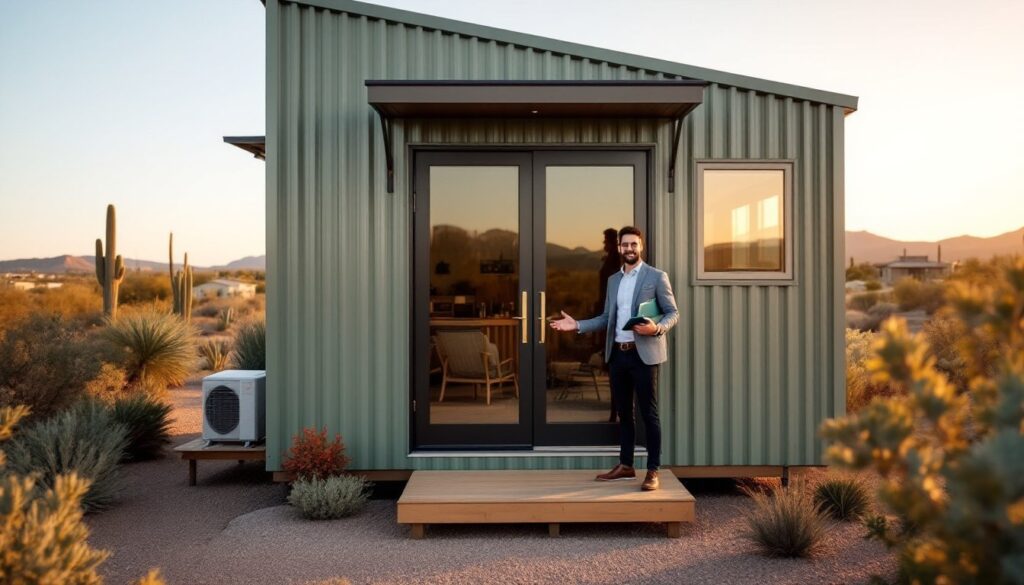
Mobile tiny homes (those on wheels or permanent trailer foundations) are treated differently than site-built homes. Some areas classify them as RVs or manufactured housing, which triggers different permitting, tax, and financing pathways. If you’re considering a prefab or modular tiny home, confirm the builder holds proper licenses and that the unit meets Arizona Residential Code standards.
Permitting requirements vary. Fixed foundations typically require building permits, electrical inspections, plumbing inspections, and final occupancy approval. Skipping or shortcutting these steps can create title issues, failed appraisals, and legal headaches during resale. Some builders cut corners on unpermitted additions, always request prior permit records and final inspection certificates.
Flood zones, soil stability, and utility infrastructure should be verified by a professional home inspector familiar with tiny homes and the local area. Mesa’s sprawl means some properties are on older, undersized sewer lines. Septic systems exist in rural pockets: confirm proper drain field installation and maintenance access. Tiny Home Tours: Discover the Magic and similar resources can help you visualize what questions to ask during property inspections.
Conclusion
Buying a tiny home in Mesa is a practical, achievable path to affordable desert living, but it demands due diligence. Verify zoning, inspect thoroughly, understand financing realities, and work with experienced local professionals. Mesa’s market continues to mature, and with the right research and patience, you’ll find a home that fits both your lifestyle and your budget.