Table of Contents
ToggleMassachusetts is experiencing a quiet revolution in housing. More residents are discovering that smaller doesn’t mean sacrificing comfort, it means gaining freedom, affordability, and a sustainable lifestyle. Whether you’re a retiree ready to shed maintenance headaches, a young professional seeking financial flexibility, or an environmentally conscious homeowner, tiny homes in Massachusetts offer a compelling alternative to traditional single-family living. The tiny home movement has gained significant traction across the state, driven by rising property costs, labor shortages in construction, and a cultural shift toward minimalism. But before you downsize, you’ll need to navigate zoning regulations, understand local codes, and find the right property or renovation partner. This guide covers everything you need to know about pursuing tiny home living in Massachusetts.
Key Takeaways
- Tiny homes in Massachusetts cost 30–50% less than median single-family homes (over $550,000), with purchase prices ranging from $50,000–$400,000 depending on type and customization.
- Massachusetts zoning is fragmented by municipality—progressive towns like Cambridge and Brookline allow tiny homes with permits, while restrictive towns enforce strict square footage and lot size minimums, making local research essential before purchasing.
- Operating costs for tiny homes drop dramatically, with annual heating expenses of $600–$1,000 (versus $1,800–$2,200 for conventional homes) and property taxes that align proportionally with assessed value.
- Permitting and compliance are non-negotiable in Massachusetts—unpermitted tiny homes cannot be insured or financed, so budget $2,000–$5,000 for permits and inspections to ensure code compliance with the International Residential Code.
- Strategic design maximizes tiny home functionality: use open shelving, murphy beds, skylights, and light colors to create perceived space, while keeping mechanical systems (HVAC ducts, plumbing) vertically stacked to conserve square footage.
- Financing tiny homes in Massachusetts requires specialized lenders like credit unions offering terms up to 20 years, as conventional banks hesitate to lend on lower-value properties, and expect rates 0.25–0.5% higher than standard mortgages.
What Are Tiny Homes and Why They’re Growing in Massachusetts
A tiny home typically measures between 400 and 800 square feet, roughly the size of a one-car garage expanded into a full living space. Unlike mobile homes or RVs, many tiny homes sit on permanent foundations or permitted plots, making them recognized real property. They can be traditional stick-built structures, modular units delivered on a flatbed truck, or even converted shipping containers. Massachusetts residents are drawn to tiny homes for three main reasons: economics, sustainability, and simplicity. First, the economics matter. Massachusetts has among the highest real estate prices in the nation, with median home prices exceeding $550,000 in many regions. A tiny home, whether purchased or built, can cost one-third to one-half what a conventional home demands. Second, the environmental appeal is real. Smaller square footage means lower heating and cooling loads, important in New England winters and humid summers. Many Massachusetts tiny home owners install solar panels, high-efficiency HVAC systems, and rainwater collection, reducing their utility footprint dramatically. Third, downsizing forces intentionality. Living with 500 square feet demands that every piece of furniture and every activity serve a purpose. This lifestyle appeals to empty nesters, young professionals, and anyone tired of managing sprawl. Tiny Home Ideas: Transform explores specific layouts and aesthetic choices popular across the state.
Zoning Laws and Regulations for Tiny Homes in Massachusetts
Here’s the hard truth: Massachusetts zoning is fragmented. Each municipality writes its own rules, and most existing ordinances were written for conventional homes. A tiny home that’s perfectly legal in one town might be prohibited in the next.
Understanding Local Ordinances by Region
Massachusetts municipalities fall into roughly three categories about tiny homes. Progressive municipalities, including parts of Cambridge, Brookline, and western communities, have begun revising ordinances to allow accessory dwelling units (ADUs), reduced lot sizes, and non-traditional structures. These towns typically require a special permit or variance, which involves presenting plans to a zoning board and demonstrating compliance with health and safety codes. The process takes 2–4 months and costs $500–$2,000 in filing and engineer fees.
Restrictive towns enforce minimum lot sizes (one acre or more), minimum square footage requirements (often 1,200 square feet), and single-family-only zoning. Tough to crack, but not impossible. You can file a dimensional variance if you meet state criteria for “hardship,” though approval rates are low, expect rejection 60–70% of the time.
Middle-ground municipalities tolerate tiny homes on owner-occupied lots or allow them as ADUs behind primary residences, but don’t actively encourage them. A direct conversation with the local building inspector or planning board costs nothing and saves headaches. Building codes in Massachusetts follow the International Residential Code (IRC) and state amendments. Tiny homes must still meet ceiling heights (7 feet minimum in habitable spaces, 5 feet in hallways), egress window sizes, and electrical/plumbing standards. A 600-square-foot tiny home still requires 1.5 bathrooms if marketed as a standalone dwelling, though definitions vary by municipality. Electrical work must follow the National Electrical Code (NEC), and any structural work needs a licensed engineer’s stamp if loads exceed code-approved tables.
Permits aren’t optional. An unpermitted tiny home is uninsurable, unmortgageable, and a liability if you ever sell. Budget $2,000–$5,000 for permitting and inspections: some towns charge per-square-foot review fees. Tiny Homes For Sale discusses finding compliant properties.
Finding and Purchasing Tiny Homes in Massachusetts
Finding a tiny home for sale in Massachusetts requires patience and creative searching. Few MLS listings specifically label properties as “tiny homes,” so you’ll need to cast a wider net. Start with local real estate agents who specialize in non-traditional properties or ADU conversions. Next, research builders and manufacturers. Companies like Tumbleweed Tiny Homes and Prefab Architecture deliver to New England, and some operate local design-build partnerships. Modular tiny homes, built in sections and assembled on-site, avoid the “mobile home” stigma and often have better financing options. Manufacturing and delivery timelines run 4–6 months, so plan ahead. Online marketplaces like Zillow, Redfin, and Facebook Marketplace occasionally list tiny homes, but filter carefully. A “tiny house” listed for $80,000 might be a shell without permits or a structure that doesn’t meet code. Request proof of occupancy permits, inspection records, and verified square footage before proceeding. Financing a tiny home can be trickier than a conventional mortgage. Banks hesitate to lend on properties under a certain value or square footage, fearing difficulty recouping losses. Conventional mortgages work if the property is permitted and on land: expect rates 0.25–0.5% higher than standard loans. Personal loans or construction-to-permanent mortgages bridge the gap for owner-builds or modifications. Some credit unions in Massachusetts, particularly in progressive communities, now offer specialized tiny home lending with terms up to 20 years. Budget 15–25% more for closing costs than you would for a standard home purchase, as appraisals and title work demand extra scrutiny.
DIY Tiny Home Design and Renovation Tips
Converting an existing structure into a tiny home or building one from scratch demands precision. Space is unforgiving, wasted inches compound quickly.
Maximizing Space in Small Footprints
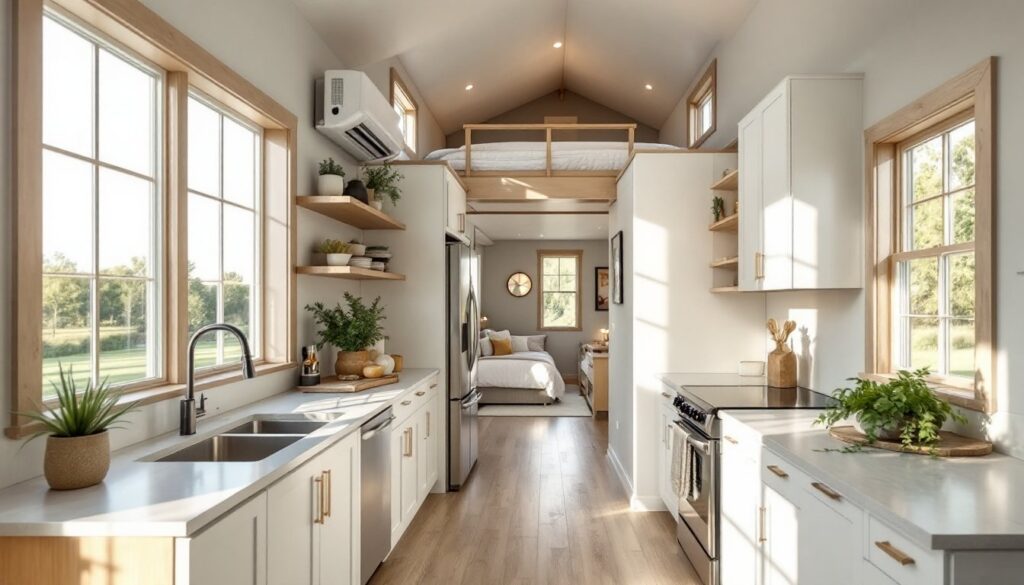
Start with a 3D floor plan before swinging a hammer. Free tools like SketchUp let you test furniture placement and foot traffic before committing to walls. In a 500-square-foot tiny home, the living, dining, and kitchen areas typically merge into one multipurpose zone. This isn’t a weakness: it’s the secret sauce. Position your kitchen along one wall to avoid blocking sightlines. Choose open shelving or glass-front cabinetry instead of solid uppers, it makes spaces feel larger and reduces the claustrophobic effect of lower ceilings (many tiny homes are 9–10 feet tall, not the standard 8 feet). Storage is your obsession. Recessed shelves in exterior walls, under-stair drawers, and pull-out pantries hide clutter without consuming floor space. A murphy bed or loft bedroom frees the ground level for living. If you go the loft route, ensure at least 3 feet of headroom above the mattress and one egress window (code requirement). Lofts accessed by steep stairs should have handrails. Color and light multiply perceived space. Light walls (soft white, pale gray) reflect daylight. Skylights or a single large window dominate visual attention. Avoid dark wood paneling: it dates the space and darkens it. Modern tiny homes favor open-concept interiors with natural finishes, white or natural-wood trim, light plywood, or masonite. Drywall finishing in a tiny home is trickier than expected. Seams show. Hire a professional finisher or invest in learning the three-coat mud-and-tape method. Painting over poorly taped drywall screams DIY. Materials matter more in small spaces because every surface is within arm’s reach. Choose quality paint (at least an eggshell finish for washability), durable flooring (luxury vinyl or concrete that withstands traffic), and hardware that doesn’t catch your shoulder as you pass. Mechanical systems, HVAC, electrical, plumbing, route differently in tiny homes. Ducts can’t hide in 12 inches of wall cavity. Ductless mini-split heat pumps are increasingly popular in Massachusetts tiny homes: they’re efficient, quiet, and flexible. Plumbing simplified: stack bathrooms and kitchen vertically if your home is multi-level. Runs longer than 10 feet from the main stack risk slow drains and trap seals. Vent stacks must exit through the roof, not the wall (code requirement in Massachusetts). Modern prefab or modular tiny homes often ship with these systems already integrated, which justifies their premium pricing, you’re buying proven engineering. Cabin Style Tiny Homes: and Great Lakes Tiny Homes: showcase regional design approaches that work in New England climates.
Cost Savings and Financial Benefits of Tiny Home Living
The financial argument for tiny homes rests on two pillars: lower acquisition cost and reduced operating expenses. Acquisition costs vary wildly. A used, pre-built tiny home might run $50,000–$120,000: a new modular unit, $150,000–$250,000: a custom-built tiny home on your land, $180,000–$400,000 depending on materials and finishes. By contrast, a median single-family home in Massachusetts costs over $550,000. Even adding land (critical for Massachusetts compliance), permits, and professional installation, a tiny home comes in at 30–50% less upfront. Monthly operating costs drop significantly. Heating a 500-square-foot space requires 60% less energy than heating a 2,000-square-foot home. Real numbers: a typical Massachusetts homeowner pays $1,800–$2,200 annually for heating oil or natural gas. Tiny home owners report $600–$1,000 annually with modern insulation and efficient systems. Electricity? A 500-square-foot home uses roughly 5,000–7,000 kWh yearly (vs. 12,000–15,000 for conventional homes), saving $500–$800 in utility bills. Property taxes vary by municipality but often drop proportionally to assessed value. A $200,000 tiny home in a town with a 1.2% property tax rate costs $2,400 annually, versus $6,600+ for a $550,000 conventional home in the same town. Maintenance costs evaporate. Fewer gutters, smaller roof, less exterior wall to paint, one HVAC system instead of a furnace and central air. Insurance premiums drop 20–40% for tiny homes, and homeowner’s insurance is cheaper overall. Long-term wealth building differs from conventional models. Tiny homes appreciate slowly (1–2% yearly) because demand remains niche and zoning constraints limit resale markets. But, if you’re downsizing from a larger home you own outright, the equity proceeds fund your retirement without a new mortgage. The hidden benefit: psychological freedom. No 30-year debt, no sprawling maintenance, no anxiety over property values. Many Massachusetts tiny home owners prioritize peace of mind over real estate appreciation. Tiny Home Costs: What dives deeper into financing strategies and break-even analysis, and sources like Curbed regularly publish cost comparisons for regional housing markets.