Table of Contents
ToggleMinnesota’s housing market has shifted dramatically in recent years, and tiny homes are emerging as a smart, affordable alternative to traditional single-family houses. Whether you’re a first-time buyer priced out of the traditional market, seeking a simpler lifestyle, or looking to downsize after retirement, tiny homes in Minnesota offer a practical solution. These compact dwellings, typically ranging from 200 to 400 square feet, cost significantly less than conventional homes while requiring less maintenance and lower utility bills. The appeal is real, especially in colder climates where energy efficiency matters. This guide walks through everything you need to know about finding, financing, and building a tiny home in Minnesota, plus the critical climate and code considerations that set the state apart.
Key Takeaways
- Tiny homes MN offer an affordable alternative to traditional houses, costing $80,000–$150,000 compared to Minnesota’s $300,000+ median home price, while reducing heating and maintenance expenses in cold climates.
- Zoning laws vary dramatically by municipality in Minnesota; always contact your city or county planning department before purchasing land, as there’s no statewide tiny home classification and some areas strictly enforce minimum square footage rules.
- Financing tiny homes remains challenging since most banks won’t finance structures under 400 square feet; explore personal loans, RV loans, chattel mortgages, or community banks, and budget for 10–15% down with 8–12% APR.
- Strategic design with multi-functional furniture, high ceilings, skylights, and open floor plans creates functional living spaces, while meticulous storage solutions integrated into walls and vertical spaces are essential to prevent clutter.
- Insulation and heating are critical for Minnesota tiny homes due to disproportionate heat loss in compact structures; invest in R-38 to R-50 wall insulation, mini-split heat pumps, and proper foundation frost protection to reduce heating costs by 30–40%.
Why Tiny Homes Are Gaining Traction in Minnesota
Tiny homes aren’t a passing trend in Minnesota, they’re becoming a legitimate housing solution for real economic and lifestyle reasons. The primary driver is affordability. A modest tiny home on a permanent foundation can cost $80,000 to $150,000, compared to the state median home price of $300,000+. For young professionals, families with tight budgets, and retirees, that difference is transformative.
Beyond cost, Minnesota’s culture of pragmatism and environmental consciousness fuels adoption. Residents value utility and reliability: tiny homes deliver both. Lower heating and cooling costs matter in a place where winter temperatures drop to minus 20°F and summer air conditioning runs for months. Smaller footprints mean less energy waste and lower property taxes, which resonates with homeowners tired of inflated utility bills.
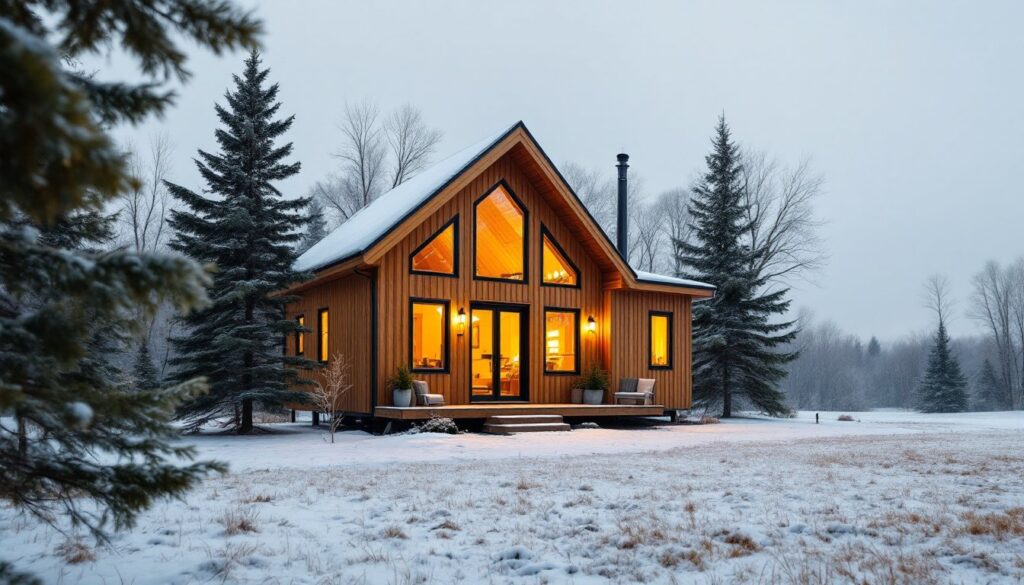
Community appeal also plays a role. Minnesota has seen the rise of tiny home neighborhoods in the Twin Cities metro and beyond, where residents share resources, know their neighbors, and enjoy a sense of intentional living. Cabin style tiny homes have particular appeal in regions like the North Shore and lake communities, blending rural Minnesota character with modern efficiency. Young families and retirees both see tiny living as a way to own rather than rent while freeing up money for travel, hobbies, or financial security.
Zoning Laws and Building Codes for Minnesota Tiny Homes
Here’s where Minnesota gets tricky: zoning laws vary dramatically by municipality, and ignoring them can mean fines or forced removal. There’s no statewide “tiny home” classification, so your options depend entirely on where you want to build.
In the Twin Cities, Minneapolis and St. Paul have relaxed some restrictions, allowing Accessory Dwelling Units (ADUs) on single-family lots and reducing minimum lot sizes. But, suburban communities often enforce strict minimum square footage rules (1,200+ sq. ft.), which disqualifies most tiny homes. Greater Minnesota towns are more flexible, especially rural areas where land is cheaper and oversight lighter.
Building codes follow the Minnesota State Building Code, which mirrors the International Building Code (IBC). Tiny homes must pass the same structural, electrical, and plumbing standards as any home, foundation depth for frost lines (Minnesota requires 3.5 to 4 feet below grade in most regions), proper egress windows in bedrooms, ventilation requirements, and electrical panel placement all apply. If your tiny home is on a permanent foundation, it’s treated like a site-built home. If it’s a mobile or modular unit, different rules apply.
Before buying land or starting design, contact your city or county planning department. Ask explicitly about ADU ordinances, minimum lot sizes, and whether tiny homes are permitted. Many communities now have specific tiny home overlay zones, check early. You’ll likely need permits for foundation work, electrical, plumbing, and final occupancy inspection. Budget 4-8 weeks for permitting and don’t underestimate the cost of compliance.
Finding and Financing Your Minnesota Tiny Home
Finding a tiny home in Minnesota requires patience and strategy. Most tiny home builders operate regionally: a few national companies ship to the state, but shipping costs and lead times add 15-25% to the final price. Local builders in the Twin Cities and Duluth area include Modern Tiny Living and a handful of independent craftspeople. Expect a custom build to take 6-12 months from contract to turnkey delivery.
Used tiny homes exist but are rare and often priced near new build costs due to low inventory. Facebook Marketplace, Tiny House Listings, and Zillow occasionally feature them, especially manufactured tiny homes and converted structures. Inspect thoroughly: previous owners’ DIY fixes or substandard construction can hide serious flaws.
Financing is where tiny homes hit a wall. Most banks won’t finance structures under 400 square feet because resale concerns loom large. Your options are limited: personal loans (higher rates, shorter terms), RV loans for mobile tiny homes (7-10 year terms, 10-15% APR), or chattel mortgages if the home sits on a rental lot. Some credit unions and community banks in Minnesota offer tiny home financing, but you’ll pay premiums. Cash purchase remains the most common route. If financing, expect 10-15% down and 8-12% annual percentage rates. This is one area where a local mortgage broker familiar with tiny homes helps tremendously, they know lenders willing to work outside traditional parameters.
Designing Functional Spaces in a Minnesota Tiny Home
Design is where tiny homes either shine or suffocate. Open floor plans dominate Minnesota builds, kitchen, dining, and living flow together without walls, creating the illusion of space. The challenge is preventing clutter and visual fatigue in such proximity.
Multi-functional furniture is non-negotiable. Murphy beds, fold-down tables, and storage ottomans aren’t luxury add-ons: they’re survival. High ceilings (9-10 feet) matter: many Minnesota builders incorporate vaulted or cathedral roofs to maximize vertical volume. Skylights and large windows combat the psychological weight of compressed interiors and, critically, boost passive solar heat in winter.
Color and material choice impact perception dramatically. Light, neutral walls and counters expand the visual field. Avoiding bold patterns and too many textures keeps the eye from bouncing frantically. Efficient appliances, compact refrigerators, combination washer-dryers, convection ovens, are standard. Kitchens typically eat 80-120 sq. ft., leaving bedrooms around 60-80 sq. ft. each and living spaces of 150-200 sq. ft. Tight, but workable if planned meticulously.
One often-overlooked design element is workflow. Where’s the refrigerator in relation to the stove? Can you open cabinet doors without bumping into the dining table? These micro-annoyances amplify in tiny homes. Walk-through mockups or detailed floor plans prevent costly design regret. Tiny home ideas resources often showcase smart layouts worth studying before finalizing your design.
Maximizing Storage in Compact Living Areas
Storage failure dooms tiny homes. Without it, clutter explodes and daily life becomes maddening. Strategic storage integrates into walls, under stairs, and above doorways. Built-in shelving, wall-mounted cabinets, and deep closets cost more upfront but reclaim precious floor space.
Vertical storage is essential, shelves extending to the ceiling, pegboards for tools and kitchen items, hanging pot racks, and wall-mounted bicycle racks all work. Under-bed drawers, hollow ottomans, and nesting tables serve double duty. Seasonal rotation systems keep current items accessible while storing off-season gear (snow gear, holiday decorations) in compact, labeled bins under stairs or in attic crawlspaces. The single best investment in a tiny home is proper storage design. Getting it wrong means constant frustration: getting it right means you won’t feel cramped even though the square footage.
Heating and Insulation Considerations for Cold Climates
This is Minnesota’s biggest challenge for tiny homes. Winters are brutal, and a tiny home’s exposed exterior-to-interior ratio means disproportionate heat loss. A 300-square-foot house has roughly the same exterior wall and roof area as a 1,500-square-foot home, so heating costs per square foot run 5x higher without proper insulation.
Minnesota code requires R-21 to R-38 wall insulation depending on climate zone (most of the state is Zone 6). Tiny homes typically exceed code with R-38 to R-50 in walls and R-49 to R-60 in ceilings. Some builders use spray foam (closed-cell, R-6 per inch) for superior air-sealing, though it’s expensive. Fiberglass batts are cheaper but require meticulous vapor barrier installation. Trust this work to professionals: mistakes cause mold and rot.
Foundation frost protection is critical. Minnesota code mandates footings below the frost line (3.5–4 feet in most regions). Insulating rim joists and basement walls with rigid foam prevents cold bridging. Proper insulation and air sealing reduce heating load by 30-40% compared to inadequate systems.
Heating systems for tiny homes favor high-efficiency units: mini-split heat pumps (air-source, ideally with electric backup for extreme cold), high-efficiency forced-air furnaces, or radiant floor heating. Wood stoves or pellet stoves add charm and supplemental heat but can’t serve as sole heat in Minnesota winters, backup is mandatory. Heat pump efficiency drops in sub-zero temperatures, so electric resistance heat or propane backup is prudent for brutal cold snaps.
You’ll spend $8,000-$15,000 on heating and insulation systems but recoup it within 5-7 years in lower utility bills. Tiny home insulation strategies and moisture control are non-negotiable for Minnesota tiny homes. Condensation and frost on interior windows signal poor insulation or ventilation: fix it immediately to prevent mold.
Conclusion
Tiny homes in Minnesota aren’t for everyone, but for those who value affordability, simplicity, and intentional living, they’re a game-changing option. Navigate the zoning maze early, secure financing creatively, design ruthlessly for function, and don’t skimp on insulation and heating, winter is merciless. With proper planning and realistic expectations, a Minnesota tiny home can deliver years of comfortable, low-cost living in the state you love.